High-Capacity Vertical Transport | Low Energy Use
Specifications:
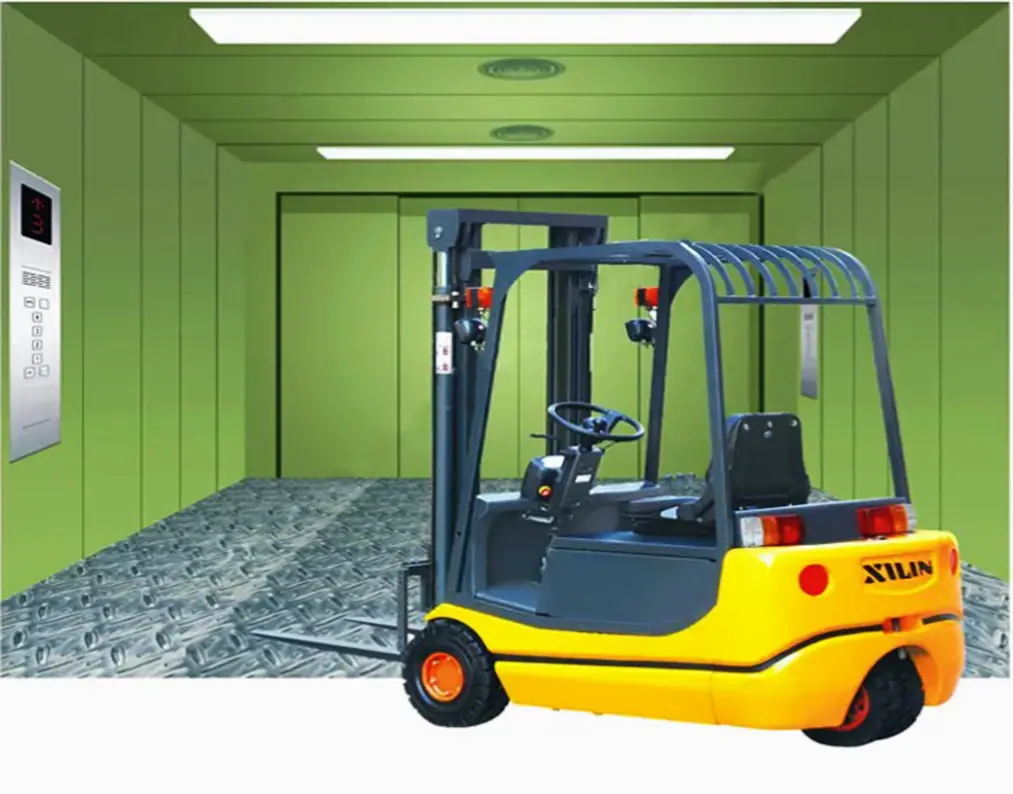
Ceiling: Painted steel
Ventilation: Circular fan
Cabin Wall: Painted steel
Cabin Door: Painted steel
Handrail: None
Floor: Anti-skid chequered plate steel
Door Opening: Center Opening
Powering Industrial Logistics with Heavy-Duty Vertical Transport
Cargo elevators (also called goods elevators) are engineered for high-capacity freight movement in demanding environments like warehouses, factories, and distribution centers. Unlike passenger elevators, these robust systems prioritize durability, weight capacity, and operational efficiency – safely transporting pallets, machinery, raw materials, and containerized goods up to 15 meters vertically.
Core Specifications & Features
-
Extreme Load Handling: 5,000–10,000 kg weight capacity (configurable)
-
Vertical Reach: Up to 15 meters travel height
-
Industrial-Grade Construction:
-
4mm steel cab walls with corner guards
-
1,400kg bi-parting metal doors
-
Diamond-plate steel flooring (forklift-rated)
-
Energy Efficiency:
-
Safety Compliance: Meets ASME B20.1, EN 81-20, and ISO 9384 standards
Critical Industry Applications
| Industry |
Use Case |
Benefit |
| Warehousing |
Dock-to-rack pallet transport |
Replaces 3 forklifts, saves 40% time |
| Manufacturing |
Moving presses/assembly lines |
Handles irregular heavy loads |
| Retail |
Stockroom-to-sales floor |
Prevents customer elevator congestion |
| Food Processing |
Freezer-to-packaging transport |
-30°C rating with food-grade seals |
Advantages Over Alternatives
✅ Higher Capacity: 3× more weight capacity than scissor lifts (10,000kg vs 3,500kg)
✅ Faster Throughput: 90-second cycle time vs 5+ minutes for ramp forklifts
✅ Space Savings: Consolidates freight flow – 1 cargo elevator replaces 4 service elevators
✅ Lower TCO: 25% reduced energy consumption vs traction elevators + minimal maintenance
Customization Options
-
Cab Configurations:
-
Clear-span (column-free) designs for oversized loads
-
Washdown-ready stainless steel for food/pharma
-
Climate-controlled for temperature-sensitive goods
-
Door Systems:
-
Smart Features:
-
RFID access control
-
Load-weighing sensors
-
Remote diagnostics
Q/A: Cargo & Goods Elevators
Q1: What’s the difference between cargo and goods elevators?
A: Terminology varies by region. "Cargo elevator" (North America) and "goods lift" (Europe/Australia) refer to the same heavy-load vertical transport systems designed exclusively for freight.
Q2: Can these transport people occasionally?
A: Never. Cargo/goods elevators lack passenger safety features (e.g., emergency brakes, phone lines). Separate passenger elevators are legally required for human transport.
Q3: How much energy do cargo elevators consume?
*A: Modern hydraulic models use 25–35% less energy than traction elevators. Example: A 5,000kg unit averages 4.5 kW per ascent cycle – costing ~$0.36/operation at commercial rates.*
Q4: What’s the maximum load capacity available?
*A: Custom industrial units can handle 20,000kg+, though 8,000–10,000kg is standard for warehouse applications. Capacity depends on pit depth, hoistway size, and hydraulic power unit specs.*
Q5: Are these suitable for existing buildings?
*A: Yes! Retrofits are common. Minimum requirements:
-
2m × 2.5m hoistway space
-
300mm pit depth
-
3.5m overhead clearance
-
400V power supply*
Ready to Optimize Your Vertical Freight Movement?
[Request Quote] | [Download Spec Sheet] | [Schedule Consultation]
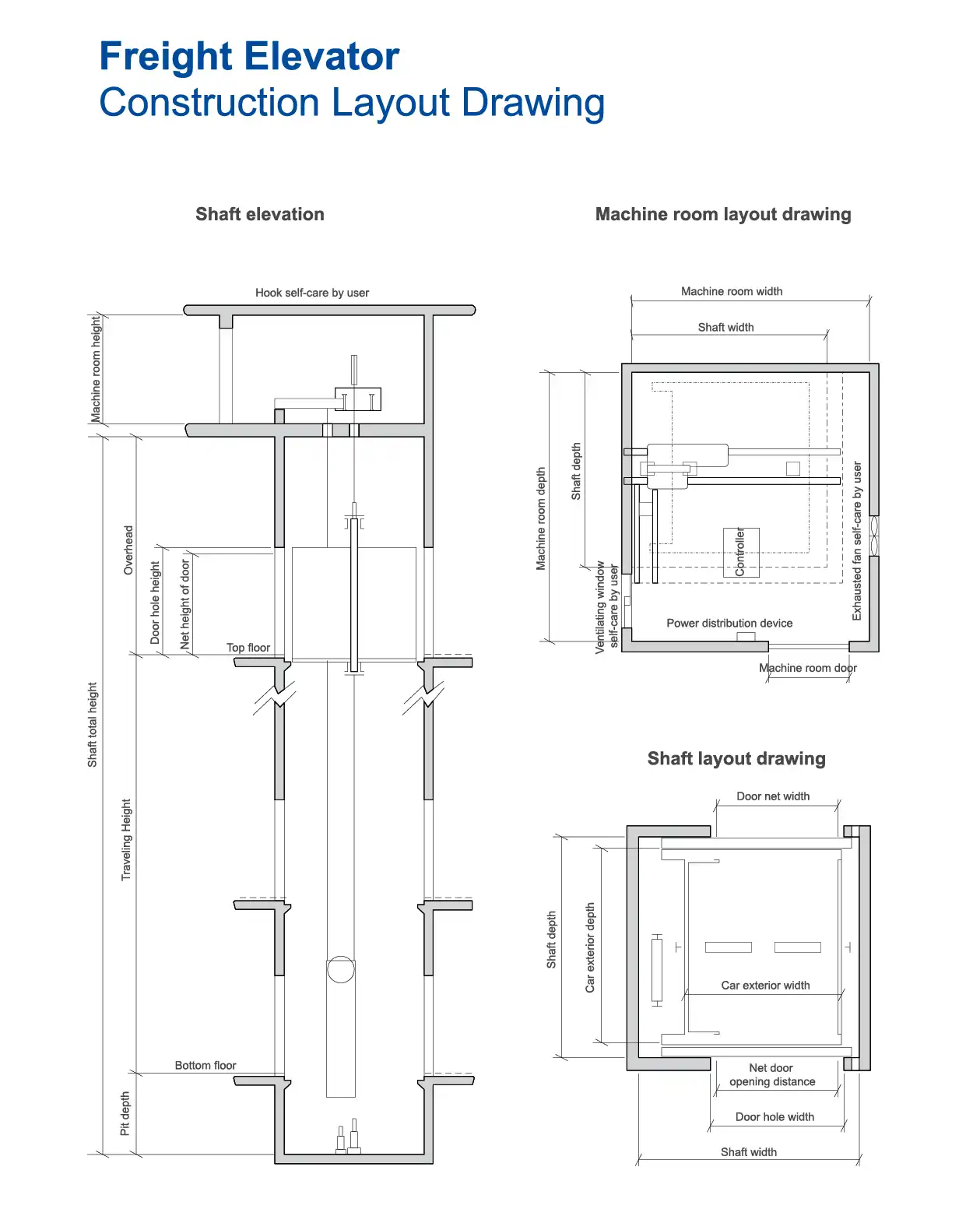
Layout Drawings: